How to start a business in the Philippines: first 30 days
How to start a business in the Philippines once the permits are done: a week-by-week checklist for your first 30 days, from your sign to your first suki.
Mapkita Team8 min read
Key takeaways
- Registration is only the start. The first 30 days decide whether people can find you, pay you and come back.
- On day one you need a sign with your name and hours, a printed payment QR, prices customers can see, and a notebook for every sale.
- In week two, get on Google Maps and Facebook with the same name, address and pin on both, then introduce yourself once in your barangay's Facebook group.
- Keep the shop's cash and stock apart from the household's from the first day, or on day 30 you won't know whether you earned anything.
How to start a business in the Philippines: the part after the permits
If you're wondering how to start a business in the Philippines, the paperwork is the part everyone writes about. The offices a new business usually deals with are DTI for the business name (Business Name Registration System), the BIR, and the business permits office at your city or municipal hall. Then the real work starts: the first 30 days after you open the shutter, when people decide if you're worth a second visit.
This is a week-by-week new business checklist for those first 30 days. It's written for a small shop with one owner and maybe one helper: a sari-sari store, a carinderia, a milk tea stall, a salon, a laundry shop. Almost every step is free. Food businesses will find the kitchen side in running a carinderia business and how to start a milk tea business.
Small business ideas in the Philippines: start with what your street lacks
Most lists of business ideas in the Philippines with small capital give you fifty options and no way to choose. A better question is what your street is missing. A business that fills a gap people already feel needs far less marketing than one that copies the shop next door.
Before you spend on stock or rent, do this check over one weekend. If three shops within walking distance already sell the same thing at the same hours, you need a reason to be chosen. If you can't say that reason in one sentence, look for a different gap.
- Walk five minutes in every direction from your spot. Write down every shop you pass and what it sells.
- Stand at the spot at 7AM, 12 noon and 6PM, and count the people who walk past in 15 minutes. Note who they are: students, office workers, tricycle drivers, nanays with kids.
- Ask ten neighbours what they still travel to town to buy: "Ano po ang binibili niyo pa sa bayan kasi wala dito?" Write down every answer.
- Match the gap to the foot traffic: breakfast near a jeepney terminal, printing and load near a school, laundry near dorms, merienda near a construction site.
- Test it before you commit. Sell from home or a folding table for two weekends, or take pre-orders on Messenger, and see whether the same people buy twice.
New business checklist, week 1: the day-one basics
On opening day a passer-by needs to know four things in a few seconds: what you sell, if you're open, how much it costs and how they can pay. Have all of this ready before you open.
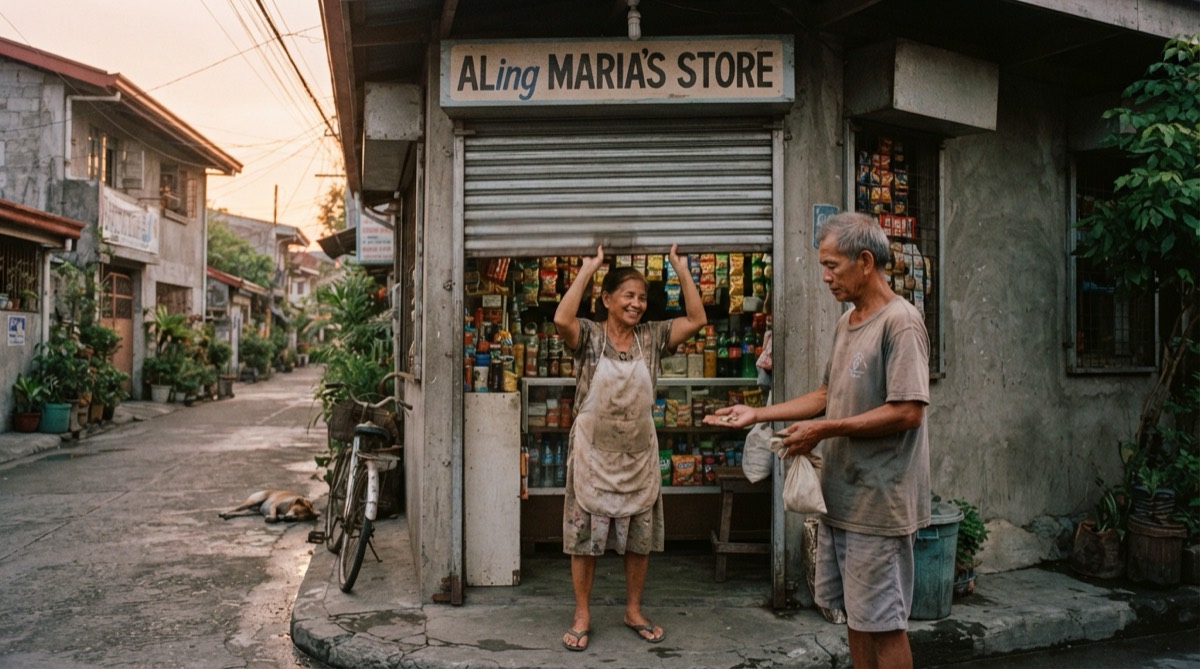
- A sign with your name and what you sell, readable from across the street. Add your hours in big numbers, for example "Open 6AM to 8PM, Mon to Sat"; store hours signage has layouts. People walk past a shop when they can't tell if it's open.
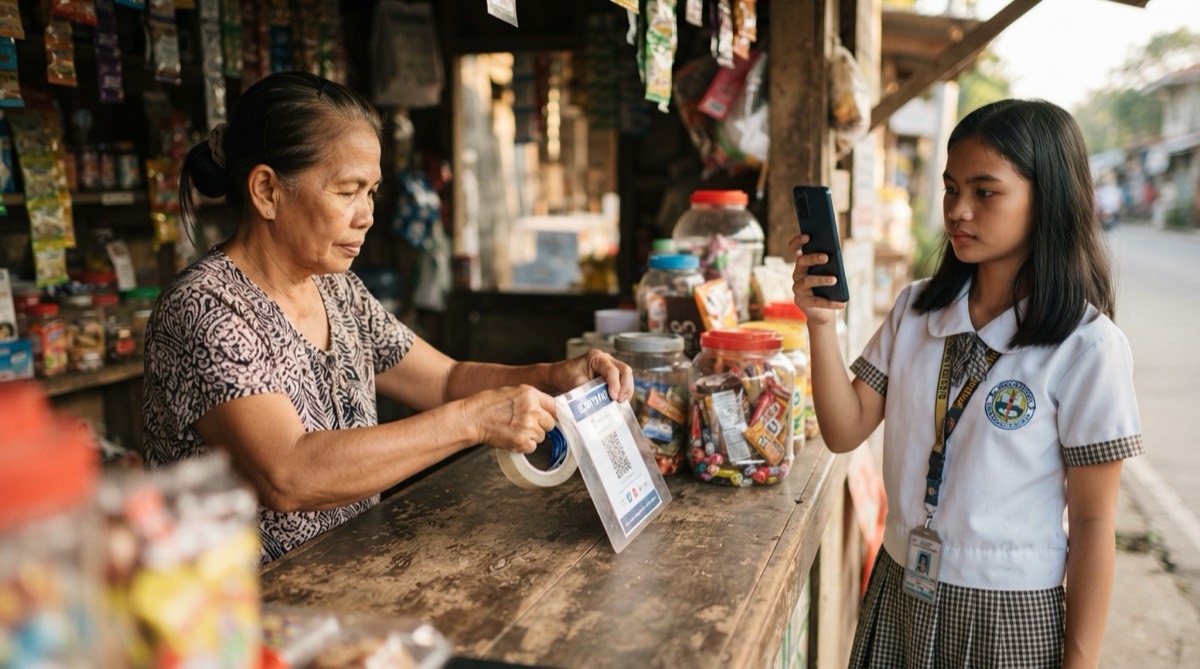
- A printed payment QR. The Bangko Sentral's QR Ph guide says small merchants don't need a card terminal: you print the QR your bank or e-wallet generates and display it. Put it at eye level where people pay, laminated; the free GCash QR sign maker prints one. Setting up the QR itself is covered in GCash QR codes for business.
- Prices customers can see. A neat handwritten list is fine. Some people won't ask the price; they just walk on.
- A notebook, or a simple sales log on your phone. Write every sale: time, item, amount, cash or GCash. It takes five seconds and it's the only way to answer the questions on day 30.
- Change ready. Start each day with barya in coins and small bills so you never lose a sale for lack of change.
- Your hours, kept. Open when the sign says, every day, for the whole first month. Regulars form around a shop they can count on.
Week 2: get found on Google Maps, Facebook and your barangay group
Your neighbours find you by walking past. Everyone else looks on their phone first. Week two is for the three places they look.
A sample post for the barangay group: "Hi po, neighbours. Bagong bukas po kami, [SHOP NAME], tapat ng barangay hall sa [STREET]. Lutong bahay na ulam, rice at merienda, 6AM to 8PM, Monday to Saturday. GCash accepted. Salamat po."
- Google Maps. Create a free Google Business Profile with the exact name on your sign, the right category, your hours and a few photos of the storefront. How to add your business to Google Maps walks through every screen, including verification.
- A Facebook Page, not a personal profile. Add your address and drag the red map pin onto your door; Facebook's help page notes that check-ins can take a few days to switch on after that. Use the same name, phone and hours as on Google.
- Your barangay or village Facebook group. Read the group rules first, then post once: who you are, what you sell, a landmark, your hours and a real photo. Answer every comment.
- The other free listings, such as Waze, Apple Maps and the delivery apps, can wait until week four. Business directory listings in the Philippines shows which ones are worth it for your kind of shop.
Week 3: your first customers
The first customers are mostly curious neighbours. The tactics for bringing in more of them, from free tastes and an opening-week offer to tracking where people heard about you, are in how to attract customers. In week three, add these two habits.
- Treat first-timers like regulars: learn names, remember what they bought, and say "Salamat po, balik po kayo" every time.
- Write down what people ask for that you don't have. Three requests for the same thing is a product idea.
Pricing sanity checks: negosyo tips for week 3
Week three is also when you check your prices against reality. A price that sells well but doesn't cover your costs is a loss that grows with every sale. These negosyo tips need no one else's price list, only your own receipts from the first two weeks.
- Cost one unit. Add up what goes into one cup, one plate or one pack: ingredients, packaging, and a share of the gas or electricity.
- Add the fixed costs. Take one week's share of rent, your helper's pay and your own pay, and divide it by the units you actually sold that week. This is the part that's easiest to leave out.
- Compare with three shops nearby, not to copy them but to see if you're far above or far below. If you're much cheaper and always busy, you may be underpriced.
- Round to easy change. Prices that match the coins and bills people carry make the counter faster.
- If a price must go up, change it once, clearly, on the sign. Small increases every week feel worse to a regular than one honest change.
Keep the business cash and stock separate from day one
Many small shops in the Philippines run from the family home, and that's where money gets mixed up. If the household takes rice from the store's stock and lunch money from the drawer, you'll reach day 30 with no idea whether the shop is earning.
- Use a separate cash box for the business, and a separate GCash or bank account if you can. Business money goes in; household money stays out.
- Pay yourself a fixed amount on a fixed day, from the shop to the household. Whatever is left stays for restocking.
- When family takes stock, write it in the notebook as a sale, even at cost.
- Count the cash at closing every day and write the total beside the day's sales. A gap you notice the same day is easy to explain. A gap you notice at month end isn't.
- Count your stock once a week. Compare what you bought, what you sold and what's left.
- Decide your utang rules before you open: who can buy on credit, how much, and when they pay. Keep every entry in a separate lista.
Week 4: suki, first reviews and your day-30 check
By week four some faces are coming back. Those are your first suki, and they're worth more than any new customer: they come without being asked and they bring friends. A stamp card from the free loyalty card maker gives them one more reason to choose you, and how to know if your customers are loyal shows what to watch.
This is also the week to start asking for reviews on Google. Ask every customer the same way and offer nothing for it: Google's review policy forbids discounts or freebies in exchange for reviews, and asking only the customers you expect to be happy. Ask once, politely, without pushing. Send your direct review link on Messenger, or say it at the counter: "Salamat po! Kung may oras po kayo, pa-review naman po kami sa Google. Malaking tulong po."
On day 30, sit down with your notebook for an hour. The answers to these questions tell you what to stock more of, what to drop, when you need a second pair of hands, and where your next peso of marketing should go.
- What were your average daily sales in week one, and in week four?
- Which three items sold most, and which hardly sold at all?
- What was your busiest hour, and your slowest?
- What did customers ask for that you didn't have?
- Where did new customers say they heard about you?
- After paying for stock, rent and yourself, was anything left?
Frequently asked
- What business can I start in the Philippines with small capital?
- Start from what your street lacks, not from a list of ideas. Count the shops and the foot traffic near your spot, ask neighbours what they still travel to buy, and test the idea from home or a table for two weekends before you rent anything.
- What should I do in the first month of a new business?
- Week one: sign, hours, payment QR, visible prices and a sales notebook. Week two: Google Maps, a Facebook Page and one post in your barangay group. Week three: first customers and a pricing check. Week four: suki, reviews on Google and a review of your numbers.
- How do I get my first customers?
- Make the shop easy to see and easy to try. Put up a sign readable from across the street, give free tastes of your best seller, run an opening-week offer for everyone, and post once in your barangay or village Facebook group. How to attract customers has the details.
- How do I keep my business money separate from household money?
- Use a separate cash box and, if you can, a separate GCash or bank account. Pay yourself a fixed amount on a fixed day, record anything the family takes as a sale, and count the cash at closing every day.
- When should a new shop start asking for Google reviews?
- From the first weeks, once things run smoothly. Ask every customer the same way and never offer anything in return, because Google's rules don't allow rewards for reviews or asking only happy customers.
Let Mapkita do this for you
Mapkita keeps your Google page right, drafts every review reply and asks you before anything goes public. Start with a free check.