Sari-sari store design: the window, signs and layout
Sari sari store design that works: the window with grills, what goes at eye level, a tarpaulin readable from across the street, lighting and a price board.
Mapkita Team9 min read
Key takeaways
- Most customers never step inside a sari-sari store. They see the window, so the window is the design: what they can see, what they can read, and how easily you can hand things through.
- Make the serving opening fit the biggest item you sell often, add a ledge for coins and bags, and keep the cash and expensive stock more than an arm's length from it.
- Put fast movers at the customer's eye level by the window: load, coffee sachets, snacks and cold drinks. Heavy items go low, slow movers go high.
- For a sign read from across a road about 10 metres away, make the store name's capital letters at least 15 cm tall, and keep the tarpaulin to a few words.
Good sari-sari store design starts at the window
Good sari-sari store design comes down to the window: customers should see what you sell from the street, read your sign from across it, and buy without waiting while you search the shelves. Get those three right before you spend on paint or decoration.
The window does three jobs at once. It shows the goods, it is where you serve, and it is your security. Every design choice below is a trade between those jobs, and the right answer depends on your street, not on a photo you saw online.
Sari-sari store design with grills: security without hiding the goods
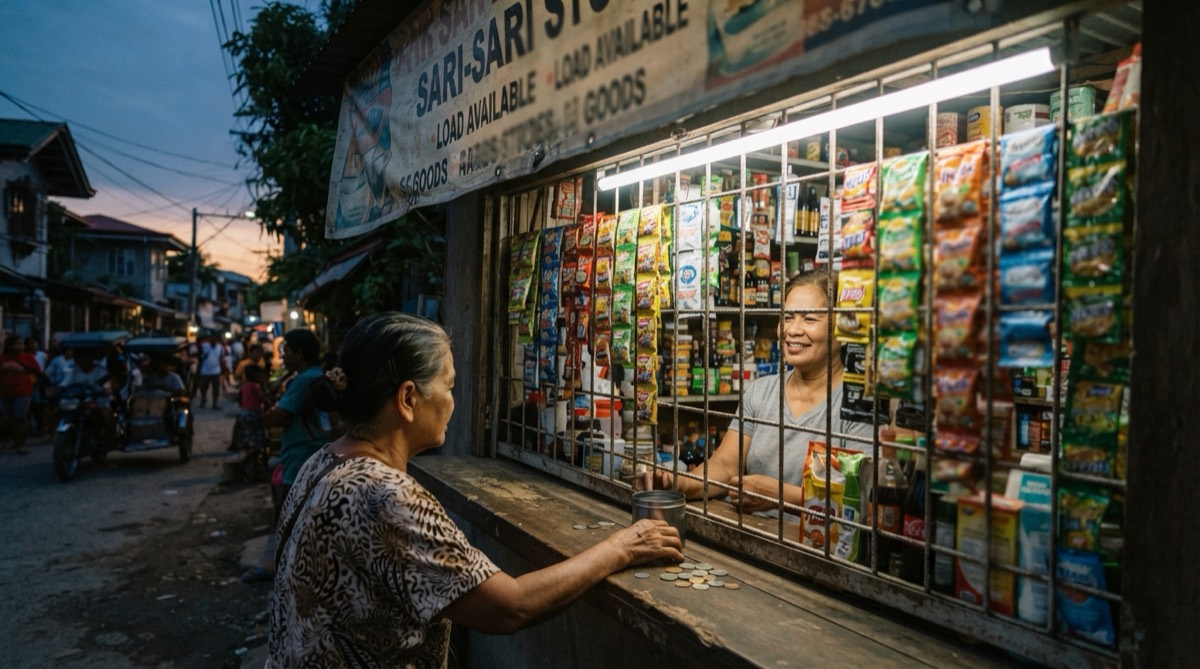
Grills keep the store safe at night and while you are inside cooking, but they also stand between the customer and the paninda. An attractive sari-sari store design with grills uses bars, not dense mesh, in front of the goods, so people can still see what you have. Mesh and steel matting stop more hands but hide more stock. A simple, modern design is plain vertical bars or flat bars with a little space between them, painted one colour, with your name panel above.
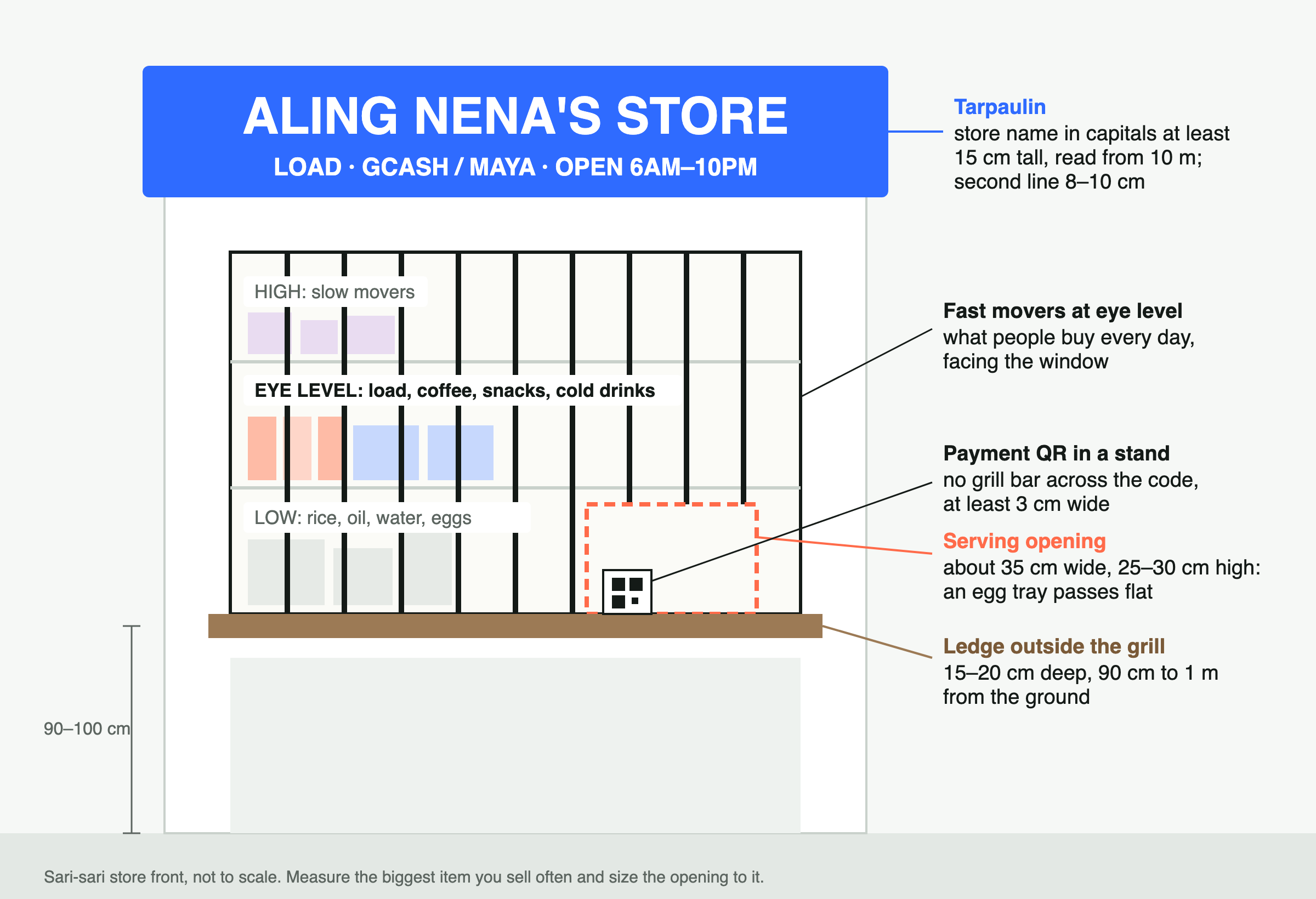
The serving opening is the part people use a hundred times a day, so design it around what you hand through. Measure the biggest thing you sell often, then add a few centimetres. In many stores an opening about 35 cm wide and 25 to 30 cm high is enough: a tray of eggs passes flat and a 1.5-litre softdrink passes lying down. If you sell gallons of water or packs of diapers, measure those instead.
- Add a ledge under the opening, 15 to 20 cm deep, outside the grill. Customers put down coins, bags and their phone to scan, and nothing falls in the canal.
- Set the ledge at about kitchen-counter height for the customer standing outside, roughly 90 cm to 1 metre from the ground.
- Keep the cash box, phones and expensive items like cigarettes more than an arm's length back from the opening.
- Fit a sliding or hinged cover for the opening, so you can close it when you step away without locking the whole store.
- Add a small roof or media agua over the window. Customers can buy in the rain, and your sachets on the grill stay dry.
Sari-sari store display ideas: what goes where
The shelf behind the window is your best selling space. A customer standing outside looks straight in at eye level, so that is where the things people buy every day belong. Put them there and you also stop reaching across the store for the same three items.
If you sell cigarettes, keep them behind you, not on the ledge, and post the sign the law requires. The Tobacco Regulation Act (RA 9211) makes selling tobacco to anyone under 18 unlawful. Stores that sell it must clearly display either "Sale/distribution to or purchase by minors of tobacco products is unlawful" or "It is unlawful for tobacco products to be sold/distributed to or purchased by persons under 18 years of age."
- Eye level, by the window: load, coffee and milk sachets, bread, snacks, candies, and the shampoo and detergent sachets people ask for most.
- Cold drinks: put the chiller where its glass door faces the window, so customers see the bottles from outside. Leave the gap behind it that the manual asks for.
- Low shelves: heavy and bulky things like rice, cooking oil, gallons of water and eggs. They are safer down there and you lift them less.
- High shelves: slow movers and backup stock.
- Group by need, the way people shop: breakfast (coffee, sugar, bread), cooking (oil, soy sauce, vinegar, seasoning), laundry (detergent, fabric conditioner), kids (snacks, juice).
- Hang sachet strips on the inside of the grill, at the sides. They look full and colourful, but don't let them cover the opening or the price board.
Sari-sari store signage and tarpaulin design
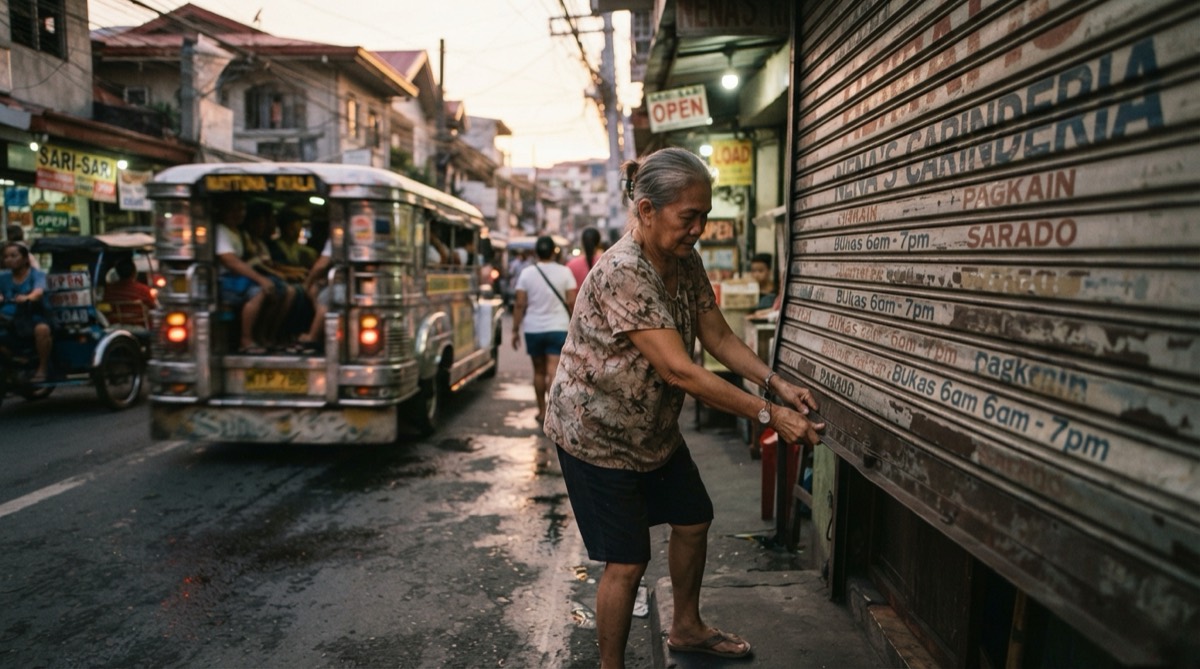
Your sign has a few seconds to be read by someone walking past or riding a tricycle, so keep it short and big. A useful rule from sign makers: each 2.5 cm of capital-letter height gives about 3 metres of maximum reading distance, and comfortable reading is closer than that (letter height and viewing distance). For a sign read from across a road about 10 metres away, make the store name's capitals at least 15 cm tall and the second line 8 to 10 cm.
Canva has free sari-sari store templates, including tarpaulins, banners and price lists. Pick one, then delete most of the words. Set the design to the real size your print shop will print, such as 3 x 6 ft, so you see how big the letters really are. Before you put up a large sign or tarpaulin over the street, check with your barangay.
- Line 1, biggest: the store name.
- Line 2: what people come for, such as "LOAD · ICE · SOFTDRINKS · RICE". Three or four words, not your whole stock list.
- Line 3: "GCash and Maya accepted" if you take them, so people without cash know before they walk over.
- Line 4, smallest: your hours, and a mobile number if you take orders by text or Viber.
- Colours: dark letters on a light background, or white or yellow letters on dark blue, red or green. Avoid red letters on blue or green; they blur from a distance.
- Typhoon season: tie the tarpaulin at every eyelet, and take it down when a strong wind signal is raised for your area.
Small sari-sari store design ideas and layout
Most stores are one room or the front of a house, so the layout has to work in a space you can cross in two steps. A U shape works best: shelves on the back wall and both sides, the counter and window in front, and you in the middle. Everything is within reach, and the customer at the window sees all three walls.
Light matters more than paint. Mount a white LED tube on the ceiling just inside the window, so it lights the shelves from the front instead of from behind the goods. Add one light over the sign outside. A store that is bright at 8 p.m. looks open and safe; a dark one looks closed, even with the window up.
- Paint the inside a light colour, such as white, cream or pale yellow, so a small store looks brighter and cleaner. Outside, pick one bold colour that matches your sign, so people can say "the yellow store by the kanto".
- On a low budget, start with what customers notice most: a clean coat of paint, one LED tube, a printed tarpaulin and a price board. Add the chiller, the ledge and better shelves as sales grow.
- Use the walls up to the ceiling for shelves, and keep the floor clear so you can move and sweep.
- Keep a stool by the window and the things you use every minute within reach of it: change, a notebook for utang, a calculator, bags.
- Store backup stock in sealed boxes or plastic containers off the floor. Ants find sugar and rats find rice.
- New stock goes behind old stock, so the oldest sells first. Check expiry dates once a week.
- Wipe the ledge, the window and the chiller door every morning. A clean window is the cheapest design upgrade there is.
The price board and the GCash QR sign
A price board answers "Magkano?" before anyone asks it. It saves you time at the window, stops arguments about prices, and lets shy customers and kids check what they can afford before they ask. A whiteboard or chalkboard works for prices that change often, such as rice, eggs and ice. A printed list works for the rest.
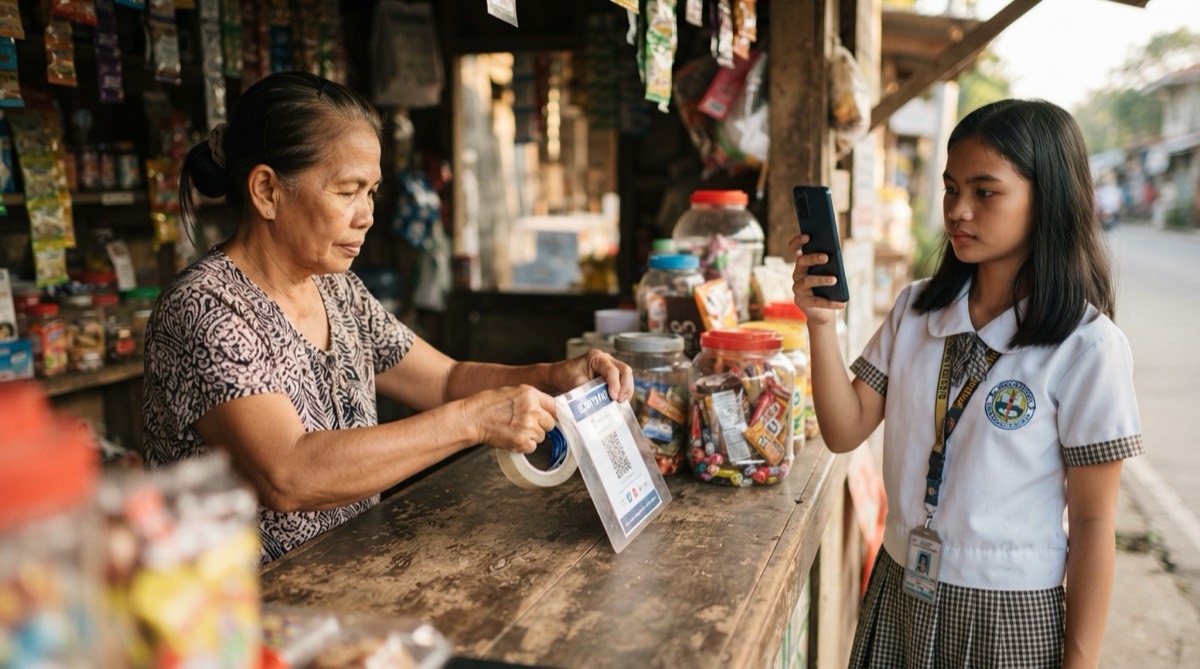
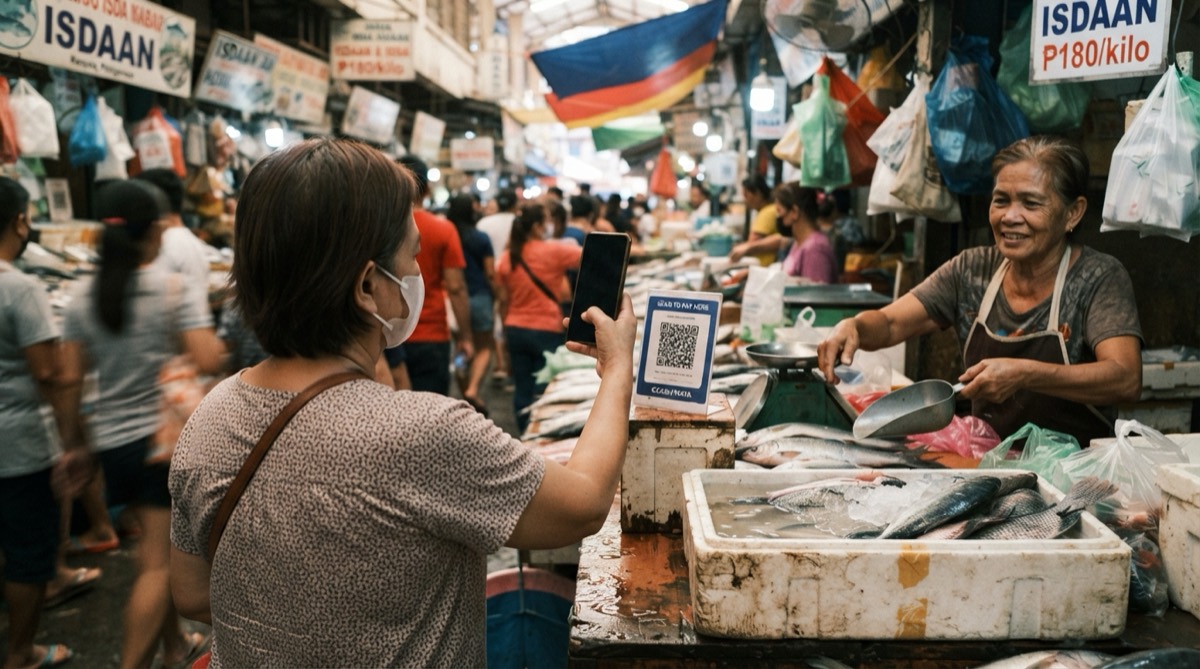
Put the QR for GCash or Maya where customers can scan it without a grill bar crossing the code: on the ledge in a stand, or taped inside the opening. Print it rather than taping up a phone screenshot, and keep it at least 3 cm wide. The free GCash QR sign maker puts your QR on a counter sign, and GCash QR codes for a small business explains how the payment side works.
- List the 15 to 20 things people ask about most, in big numbers. Not every item in the store.
- Write prices you can change in marker. Reprint the list when more than a few lines are crossed out.
- Put the board at the side of the window, at eye level, under the light.
- Light the QR sign at night and use a matte laminate. Glare on a glossy sheet can stop phones from reading it.
- Post your hours too. What to put on a store hours sign has wording you can copy.
Sari-sari store name ideas: a pattern, not a list
You don't need a list of 100 names. Good sari-sari store names follow a few patterns, and the best one is the name your neighbours already use for you. If people say "kina Aling Nena", that is your store name.
Test your favourite on the sign before you print: if it doesn't fit in big letters on one line, it's too long. If you register the business name, search it first on DTI's Business Name Registration System. Then add the store to Google Maps under the same name, so people searching nearby find you.
- Owner or family: "Aling Nena's Store", "Tatay Ben Sari-Sari", "Tres Hermanas Store".
- Place: "Kanto Store", "Purok 5 Sari-Sari", "Tabing-Daan Store".
- What you're known for: "Yelo at Load ni Jun", "Kape't Pandesal Corner".
- Keep it to two or three words, easy to say out loud, and different from the store across the street.
Frequently asked
- What is the best design for a sari-sari store?
- One where customers can see the goods from the street, read the sign from across it and buy quickly through the window. Bars instead of dense mesh, fast movers at eye level, a bright light inside and a short, big sign matter more than paint or decoration.
- How big should the window opening of a sari-sari store be?
- Big enough for the largest item you sell often, plus a few centimetres. In many stores about 35 cm wide and 25 to 30 cm high is enough for a tray of eggs and a 1.5-litre bottle lying down. Add a 15 to 20 cm ledge outside it.
- What should I put on my sari-sari store tarpaulin?
- The store name in the biggest letters, then three or four things people come for, such as load, ice and softdrinks, then "GCash and Maya accepted" if you take them, and your hours. Fewer words means bigger letters people can read from across the street.
- What colours are best for a sari-sari store sign?
- High contrast: dark letters on a light background, or white or yellow on dark blue, red or green. Avoid red letters on blue or green, which blur from a distance, and keep the sign to two or three colours.
- How can I make my sari-sari store attractive?
- Keep the window clean and bright, with a white LED inside and a light on the sign at night. Put colourful fast movers and cold drinks at eye level by the window, use one bold outside colour that matches a short, big sign, and post a price board.
Let Mapkita do this for you
Mapkita keeps your Google page right, drafts every review reply and asks you before anything goes public. Start with a free check.