Loyalty program for small business: a stamp card that works
Set up a loyalty program for a café, salon or sari-sari store: stamp card vs app, how many stamps, reward ideas, fake stamps and a Taglish staff script.
Mapkita Team8 min read
Key takeaways
- Most small shops don't need an app. A printed stamp card works for every customer, including those with no data or no smartphone.
- Price the reward at what it costs you, not the menu price. For example, a ₱30-to-make coffee given free after 9 paid ₱100 coffees costs you about 3% of what the customer spent.
- Match the stamps to how often people buy: 10 or 12 for coffee and meals, 8 for weekly laundry, 6 for monthly salon visits.
- Stamps are for purchases only. Google forbids offering anything, including a stamp or a discount, in exchange for a review.
Does a small business need a loyalty program?
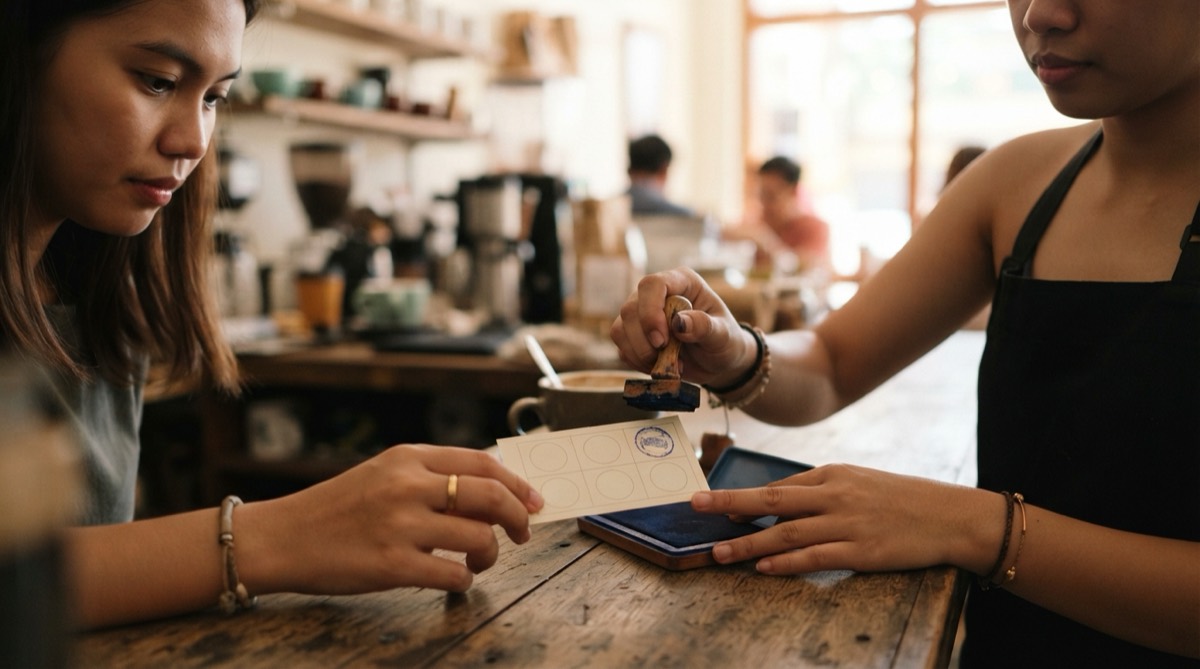
A loyalty program for a small shop can be as simple as a stamp card: one stamp per purchase, and a reward when the card is full. For most cafés, milk tea shops, carinderias, salons and laundry shops, a printed card does what an app would, costs little to print, and works for customers with no data or no smartphone.
A card gives a regular one more reason to choose you over the stall next door, and it shows you how many customers come back. It can't fix slow service, a smaller portion or a rude counter. Fix those first; a stamp card on top of a bad experience is just a card.
Stamp cards work because of how people behave near a goal. In a study of a real café reward program, customers bought coffee more often the closer they got to the free one. The same study found that a 12-stamp card with 2 bonus stamps already filled was completed faster than a plain 10-stamp card, although both needed 10 purchases.
Stamp card, punch card, points or app: the honest trade-offs
Start with paper. If after three months your cards come back full and customers ask for more, you'll know whether anything bigger is worth paying for.
- Stamp card or punch card: cheapest and fastest to start, and anyone can use it. Cards get lost, and you can't message customers through them. Best for almost every small shop.
- Points: one point per ₱50 or ₱100 spent, for example. Fairer when order sizes vary a lot, as in a sari-sari store, but customers and staff must do the maths. Best when your POS counts points for you.
- Loyalty app or digital card: no lost cards, and you get customer contacts and reminders. But apps usually charge a monthly subscription (check the provider's current price), staff need training, and every customer has to download or sign up, which many won't. Best for chains or busy shops in malls.
- Suki perks with no card: a free extra or a small discount for regulars you know. Personal and free to run, but invisible to new customers and hard to keep fair between staff.
How many stamps? Do the maths first
Match the number of stamps to how often people buy. For everyday purchases, a regular should fill a card in one to two months; longer, and they forget they have it. For monthly services like a haircut, keep it to about six visits and make the reward worth the wait.
Then check what the reward really costs. A free item costs you its ingredients or materials, not its menu price.
- Example only, round numbers: a coffee sells for ₱100 and costs ₱30 to make.
- Card: buy 9, get the 10th free. The customer pays ₱900 for 10 coffees, and the free one costs you ₱30, about 3% of what they spent. To them it feels like 10% off.
- With 8 stamps (buy 7, get the 8th free), the same coffee costs you ₱30 out of ₱700, about 4%.
- Your own check: cost of the reward ÷ what a customer spends to earn it. If your margin can't carry the result, add stamps or choose a cheaper reward.
- Starting points: 10 or 12 stamps for coffee, milk tea or a carinderia meal bought several times a week; 8 for a weekly laundry load; 6 for a monthly haircut or salon service.
- The head start: print a 12-stamp card, stamp the first 2 circles as a welcome, and change the reward line to "10th drink free". The customer pays for 9 drinks and the 10th is free, exactly as on a plain 10-stamp card, but starts with 2 circles already filled, which the café study found gets cards finished faster.
Loyalty program examples and reward ideas by type of shop
The best reward is something your regulars already buy, so it costs you little and they value it at full price.
- Café: a coffee loyalty card with a free drink of any size on the 10th, or a free pastry. Letting them choose the drink costs little more and feels generous.
- Milk tea shop: a free regular milk tea on the 10th cup, or a free add-on like pearls if your margin on drinks is thin.
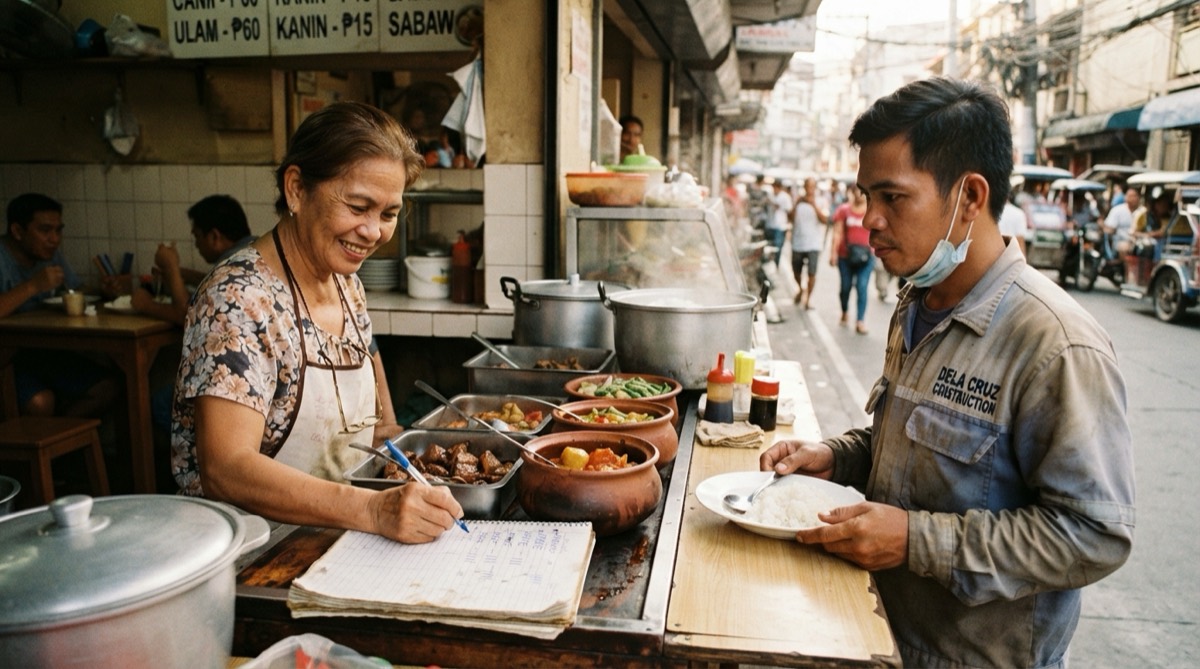
- Carinderia: a free ulam or a free meal on the 10th. Free extra rice is a cheap reward that customers notice.
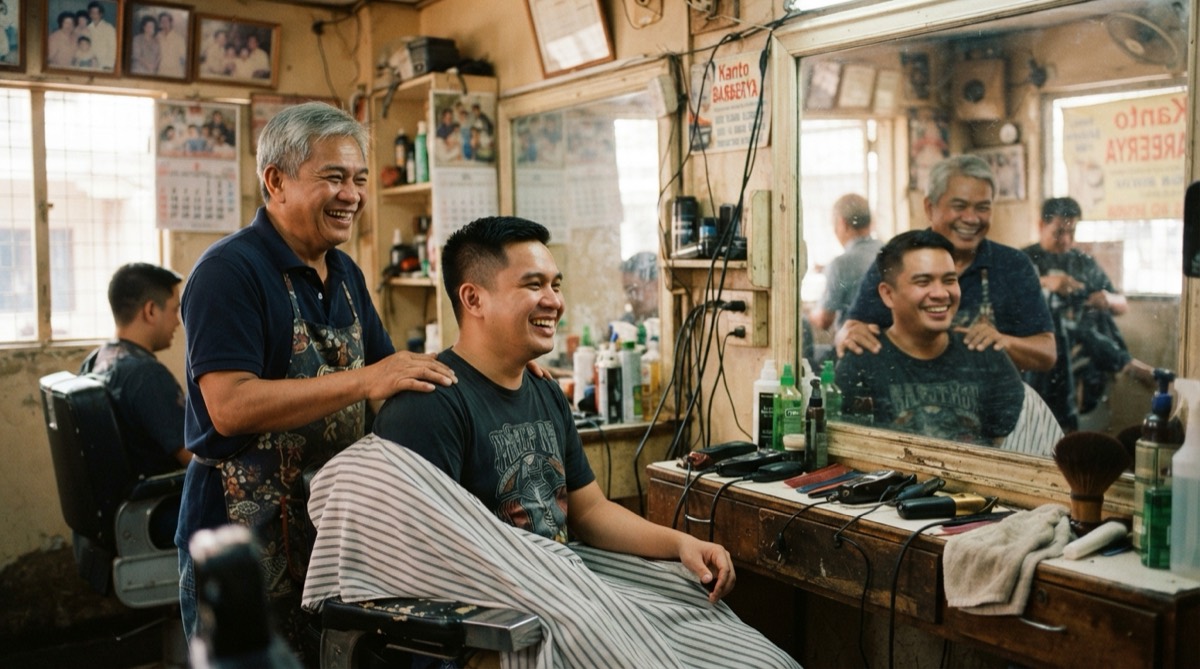
- Salon or barbershop: a free hair wash, blow-dry or hair treatment on the 6th visit. A barbershop with quick cuts can offer the 6th cut free.
- Laundry shop: a free wash-dry-fold load on the 8th visit. Weekly customers reach it in about two months.
- Water refilling station: the 10th gallon free.
- Sari-sari store: one stamp per ₱100 spent, not per visit, with a small reward like a softdrink. Margins are thin, so keep the reward small.
Loyalty card design: what to put on the card
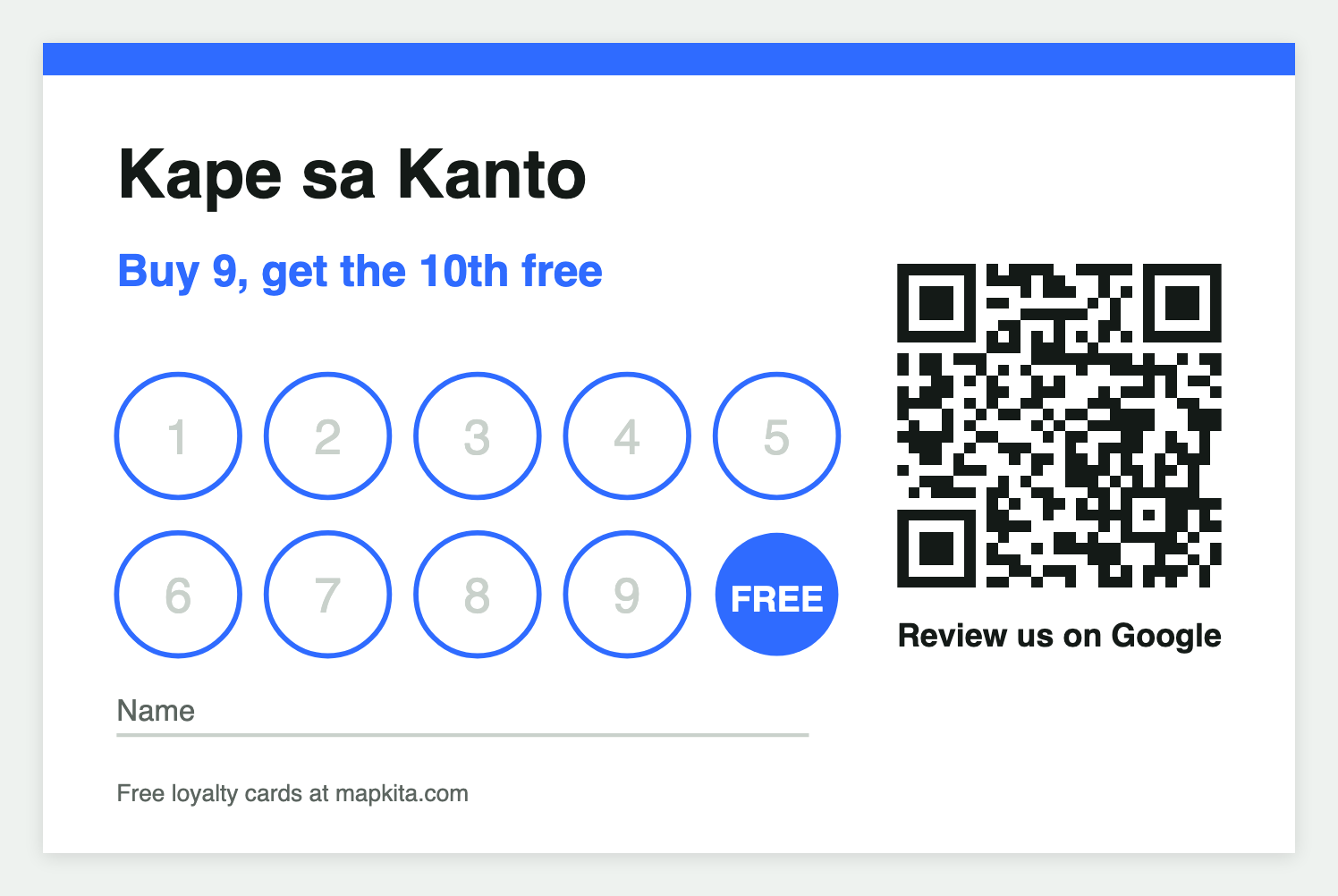
A loyalty card needs only a few things, plus thick paper. The free loyalty card template lays them out for you: wallet size (85 × 55 mm, ten to an A4 sheet) or a large card (105 × 74 mm, eight to a sheet).
- Your shop's name, big, so the card is easy to find in a wallet full of other cards.
- The reward in one line: "Buy 9, get the 10th free" or "10th milk tea free". Name exactly what they get.
- The stamp grid: 6, 8, 10 or 12 circles, with the last one filled in and marked FREE (or a short word like LIBRE).
- An optional QR code to your Facebook Page, your menu or your Google review link. If it's the review link, the card must not tie it to a stamp.
- Validity: decide whether full cards expire. If they do, write a "valid until" date by hand on each card when you hand it out, so nobody is surprised at the counter. If they don't, say so when customers ask.
- Print on thick paper at 100% scale. Thin paper tears quickly in a wallet.
How to stop fake stamps
Most customers are honest. A few small habits keep the rest from costing you.
- Use something hard to copy: a self-inking stamp with your shop's name from a print shop, a shaped hole punch, or your initials and the date in each box.
- One stamp per receipt, given at payment, never "for later".
- Keep the stamp with the cashier, not on the counter where anyone can reach it.
- Same rules for staff, family and barkada. A free card for a friend is a free meal from your till.
- For bigger rewards, such as a free salon service, note the date of each visit in your booking notebook too, and check before you redeem.
- If a full card looks wrong, don't accuse anyone. Honour it once, then change your stamp or punch.
Launch script for staff, in English and Taglish
A card nobody mentions does nothing. Have every staff member offer it at payment for the first month, using these lines.
Two things before launch day. Some promotions in the Philippines need a DTI sales promotion permit, depending on how they are run and announced. If you plan to advertise your card widely, ask the DTI Sales Promotion Division or your Negosyo Center first. And if you ever end or change the program, honour the cards already out.
- Offering the card: "Do you have our loyalty card? One stamp per drink, and your 10th is free." / "Ma'am, may loyalty card na po kami. Isang stamp po bawat drink, tapos libre na po yung pang-10. Gusto niyo po?"
- If you use the head start: "We've added two welcome stamps to start you off." / "May dalawang welcome stamp na po kayo agad."
- Stamping: "That's your third. Six more and the 10th is free." / "Pangatlo na po. Anim pa po, tapos libre na yung pang-10!"
- Full card: "Your card's full, so today's drink is on us. Here's a new card." / "Puno na po yung card niyo, libre na po ito. Eto po yung bago."
- Lost card: "No problem, here's a new one." / "Okay lang po, eto po yung bagong card. Sa wallet niyo po ilagay para hindi mawala."
- Counter sign: "Loyalty card: 1 stamp per drink. 10th drink FREE. Ask us for a card."
Stamps are never for reviews
Never give a stamp, a discount or a freebie for a Google review, and never take one away for a bad review. Google's policy says businesses may not "offer incentives – such as payment, discounts, free goods and/or services - in exchange for posting any review" (Google Business Profile Help). A profile caught doing it can lose reviews, be blocked from getting new ones for a while, or show a warning to customers (Google).
A review QR on your loyalty card is fine, as long as the stamp is for the purchase and the review is a separate, free ask made to every customer. How to ask customers for Google reviews has the wording, and how to know if your customers are loyal shows how to tell whether your card is working.
Frequently asked
- How do I create a loyalty program for my small business?
- Start with a printed stamp card. Choose a reward your regulars already buy, and set the stamps so a regular fills the card in one to two months. Print the cards and have every staff member offer one at payment.
- How many stamps should a loyalty card have?
- Usually 6 to 12. Use 10 or 12 for things bought several times a week, like coffee or meals, 8 for weekly purchases like laundry, and 6 for monthly services like a haircut.
- What are good loyalty card ideas for a small shop?
- Reward with something customers already buy. A free drink at a café, a free ulam at a carinderia, a hair treatment at a salon, a free load at a laundry shop or a free gallon at a water station all work.
- Can I give a stamp or a discount for a Google review?
- No. Google does not allow businesses to offer payment, discounts, free goods or services in exchange for a review. Give stamps for purchases only and ask for reviews separately, from every customer.
- Is a stamp card better than a loyalty app?
- For most small shops, yes, at least to start. A stamp card costs little, works for every customer and needs no training. An app makes sense later, if you need customer contacts or run several branches.
Let Mapkita do this for you
Mapkita keeps your Google page right, drafts every review reply and asks you before anything goes public. Start with a free check.