Food cart business: franchise or your own cart?
Starting a food cart business in the Philippines? Compare a food cart franchise with your own cart, choose the spot, and get your kiosk found on Google Maps.
Mapkita Team8 min read
Key takeaways
- A food cart franchise gives you a known name, a recipe and a supply line. Your own cart gives you freedom and every problem to solve yourself.
- Food carts and kiosks get very few Google reviews: a median of 2 per branch in our Metro Manila sample, and 78% had fewer than 10.
- With so few reviews, read them across many branches at once, then visit five carts before you trust any star rating.
- Count foot traffic at the hours you will sell before you sign for a spot. Then put a review QR on the cart from day one.
What a food cart business really is
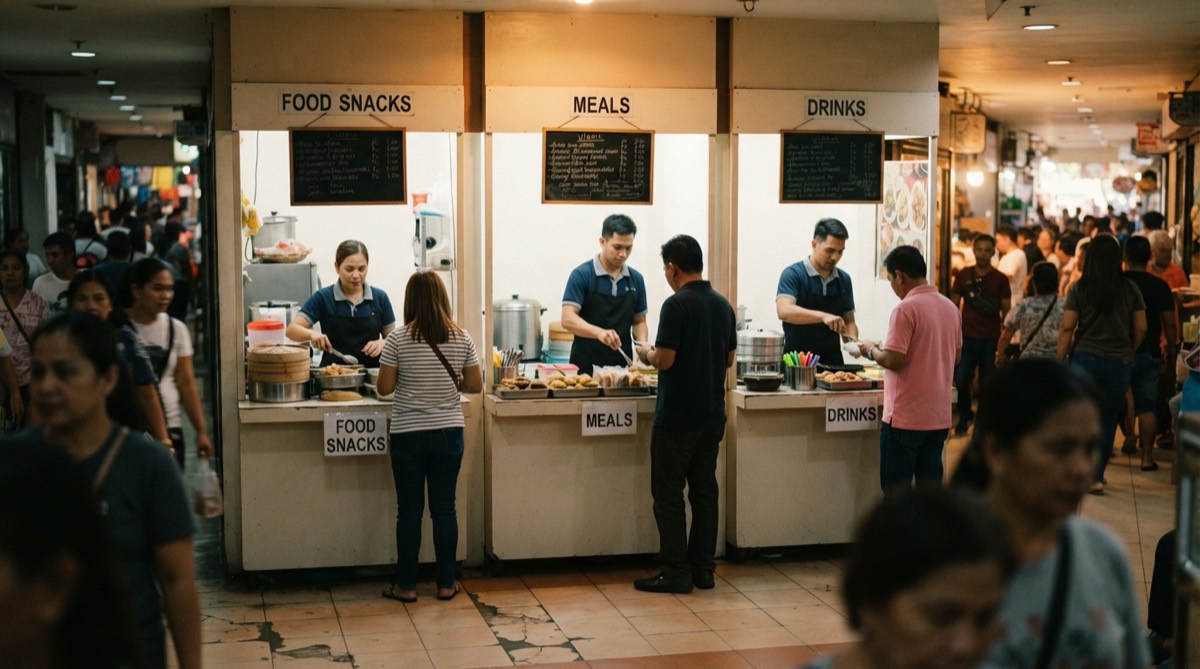
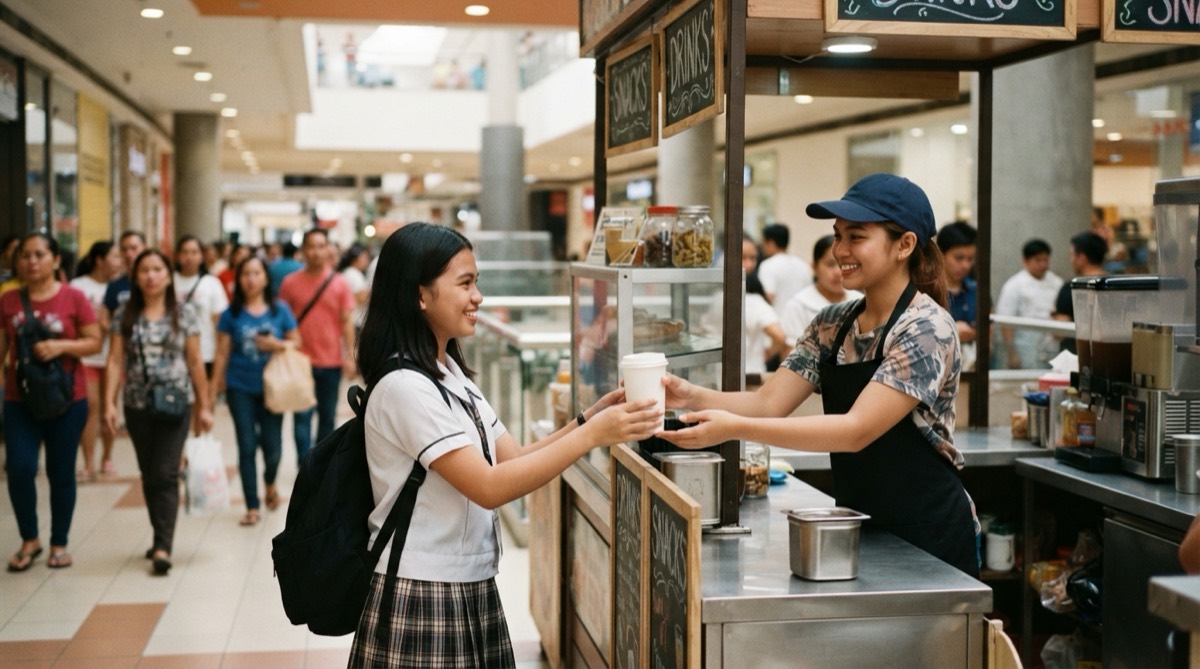
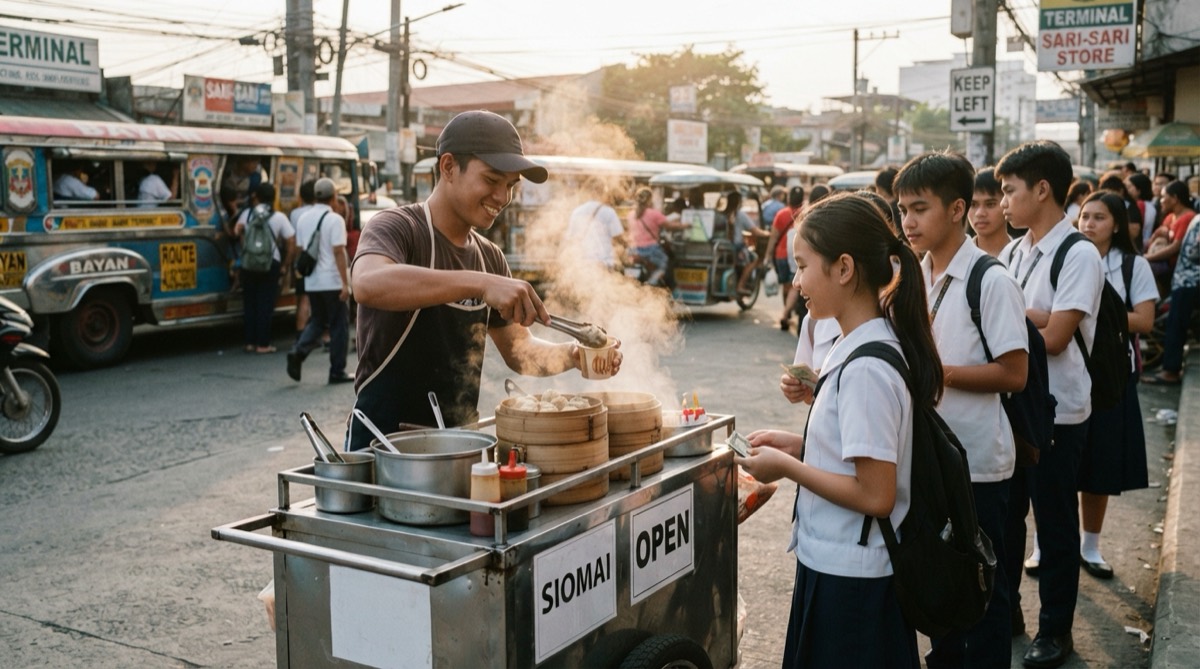
A food cart business is a small counter selling one or two things fast: fries, siomai, shawarma, fishballs, a lemonade, a milk tea. It sits where people already walk past, in a mall corridor, a terminal, a school gate, a market or a church plaza. The menu is short on purpose, so one or two people can run it all day.
Many carts are franchises. In Bacolod City, a study found that most food cart businesses are franchisees and most are single proprietorships, with operations governed by a manual. The biggest networks are large. Potato Corner, for example, passed 2,100 stores in the Philippines by the end of 2025, with roughly 80% of its locations franchised.
This guide covers the three decisions that matter most: franchise or your own cart, what to check before you buy, and where to put it. Then it covers how a cart gets found on Google Maps, which most cart owners never set up. For how franchising works in general, see what franchising is and how it works here.
Food cart business ideas that work in the Philippines
Pick an idea for what the spot needs, not only for what you like to eat. Each idea below comes with the setup it needs and a common complaint to watch for.
- Fries and flavored snacks: a fryer and power. Watch for: soggy or cold fries, too little flavor powder.
- Siomai and siopao: a steamer and water. Watch for: siomai served lukewarm, sauce or chili oil running out.
- Shawarma and wraps: a grill, cold storage and more prep. Watch for: small fillings, long waits at lunch.
- Fishball, kikiam and kwek-kwek: a fryer, cheap and fast. Watch for: reused oil, sauce hygiene.
- Takoyaki and corndogs: a special griddle or fryer and a trained cook. Watch for: raw centers when rushed.
- Lemonade, fruit shakes and milk tea: a blender, ice and clean water. Watch for: too sweet, too much ice, pearls too hard.
- Coffee cart: a machine, steady power and trained hands. Watch for: taste that changes from day to day.
- Halo-halo, ice scramble and ice cream: freezers and ice supply. Watch for: melting, closed early on hot days because stock ran out.
Food cart franchise or your own cart?
The choice is less about money than about what you want to build yourself. Here is what each side gives you and asks of you.
- With a food cart franchise you get a name customers already search for, a tested recipe, a supplier, the cart design, training and, often, help choosing a spot.
- With a food cart franchise you give up control. You buy from the franchisor's supplier, follow its menu and prices, and accept its rules on where you may open. Most charge a franchise fee plus ongoing fees or required purchases; ask for every one of them in writing.
- With your own cart you set the menu and the price, change suppliers when you want, and keep the name if it grows.
- With your own cart you build everything: the recipe, the name, the signage, the supply, the training, and the trust of customers who have never heard of you.
- A franchise suits you if you want a working system and will follow it. Your own cart suits you if you already have a recipe people ask for and the patience to build a name.
How to check a food cart franchise before you sign
With a restaurant franchise, you can read a few hundred reviews per branch and see the pattern. Food carts are different. In a Mapkita sample of 1,646 Metro Manila branches of 35 chain brands on Google Maps (October 2026), food carts and kiosks had a median of 2 reviews per branch. 78% had fewer than 10, and 59 of the 231 cart branches had no rating at all.
That changes how you read them. A cart with 3 reviews and 2.7 stars may simply have met three unlucky customers. A cart with 5.0 from 2 reviews may have met two happy regulars. Neither tells you much on its own. The details are in our study of how franchise branches rate on Google. Start from the general franchise review scorecard, then adjust it for carts like this.
- Pool the reviews. Open 15 to 20 branches of the brand on Google Maps and read every review, as if they were one long list. Patterns appear even when each branch has only a few.
- Note the complaints that repeat across cities: cold food, small portions, carts closed during posted hours, staff who don't give change. Those come from the system, not one crew.
- Read the Facebook page comments and tagged posts too. Cart customers comment more than they review.
- Visit five carts at their busiest hour. Buy the best-seller, check that it is hot, and see whether the cart looks like the photos.
- Ask two or three franchisees, ones you find yourself, how long it took to get stock when they ran out, and what head office did when sales dropped.
- Follow the Philippine Franchise Association's advisory: check who is behind the brand, whether it owns its trademark, and whether there is a real operations manual and training. Be wary of pressure to pay fast.
- Have a lawyer read the franchise agreement before you sign.
Where to put a food cart: the location checklist
A cart lives or dies on its spot. Before you sign a lease or a franchise for a spot, stand there and count. Do it on two weekdays and one weekend day, at the hours you plan to sell.
Here is a worked example. You are looking at a spot near a jeepney terminal. You count people walking past in 15-minute windows: 7:00 to 7:15 a.m., 12:00 to 12:15 p.m. and 5:30 to 5:45 p.m. You get 180, 95 and 240. The evening rush is your day. A snack that sells on the way home, such as siomai or fries, fits better than a breakfast item. Note who they are too: students with ₱50 in their pocket buy differently from office workers.
- Foot traffic at your selling hours, counted, not guessed.
- Who passes: students, commuters, office workers, shoppers, families.
- Competition within sight: two fry carts side by side split the same crowd.
- Opening hours you are allowed: a mall sets them for you, and you must keep them.
- Power, water and a place to wash up. A fryer without steady power is a dead cart.
- Shade and rain cover, and where the cart goes at night.
- Distance to your supplier or commissary, and how you restock mid-day.
- Can people find it? "Near entrance 3, ground floor" is a real direction. "Inside the mall" is not.
How a food cart business gets found on Google Maps
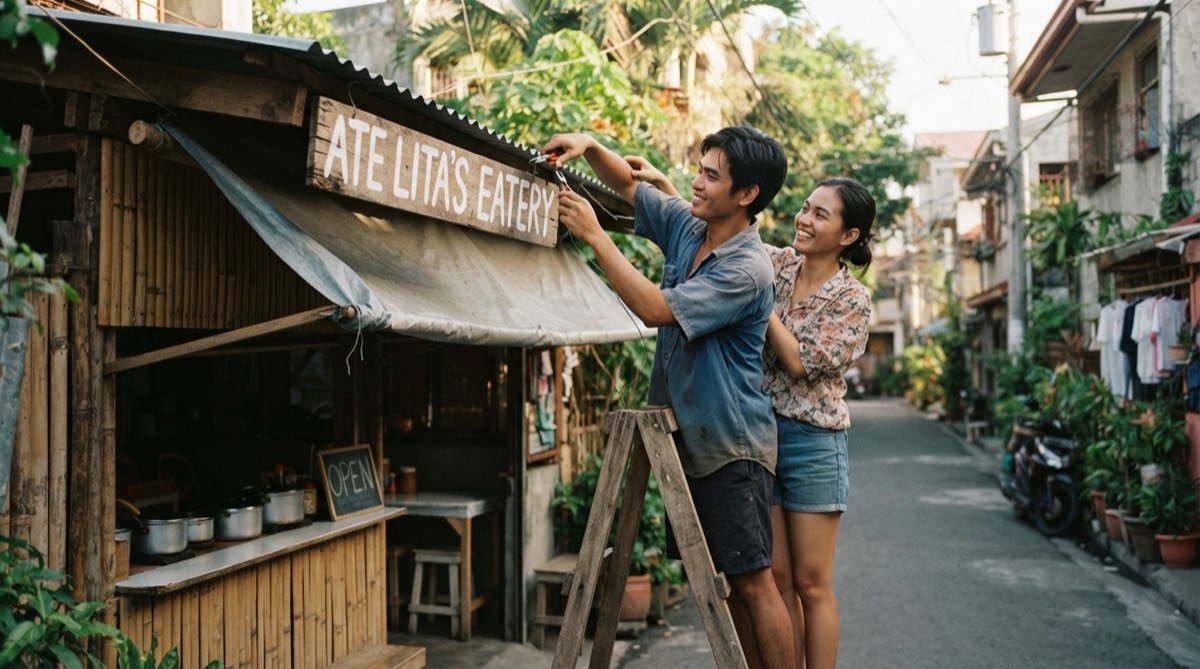
People search "siomai near me" or "fries" from inside the mall. A cart with a Google profile shows up on the map; a cart without one doesn't exist for that search. Google's guidelines for representing your business are written for places customers can visit. They ask that businesses showing an address keep permanent fixed signage of their name there. A cart that stays in one spot with its sign up fits that. A cart that moves to a different place every day does not.
If you bought a franchise, ask the franchisor before you create anything. Google asks every location of a business in the same country to use the same name, and many brands create their branches' profiles themselves. If you both make one, you get a duplicate. If it is your own cart, our guide to adding a business to Google Maps walks through the steps.
Once the profile is live, get the basics right:
- Put the pin exactly where the cart stands, and add a landmark in the address, such as "Ground floor, beside the escalator".
- Set your real hours, which in a mall are the mall's hours, and update them for holidays.
- Add photos of your actual cart and your food as you serve it, not the brand's posters.
- Make a review QR code and stick it on the cart where people wait for their order.
- Ask every customer the same way: "Pa-review naman po kami sa Google, salamat po." Don't ask only the ones who look happy, and don't offer extra sauce or a discount for a review. Google's policy bans both, and it bans pressuring people to review while they are still at the cart. The QR lets them do it later.
- Reply to each review, especially the bad ones. With so few reviews, one calm reply is seen by nearly everyone who opens the profile.
A daily routine for a cart that earns good reviews
The complaints in cart reviews are almost always the same few. A short routine stops most of them. Print it and tape it inside the cart.
- Before opening: cart clean, sign visible, price list up, change ready, oil or steamer water fresh, stock counted.
- Every hour: taste one piece. If it isn't hot and crisp, it doesn't go out.
- Rush hour: two people if the spot needs it, one cooking and one taking money.
- Running low: message the supplier by noon, not when the last pack is open.
- Closing: never close before the posted time. If you must, change the hours on Google first.
- Daily: check new reviews and messages on the phone, and answer them before the next shift.
Frequently asked
- What is a food cart business?
- A food cart business is a small, often mobile counter that sells a short menu of snacks or drinks in a busy spot such as a mall, terminal, school area or market. Many in the Philippines are franchises of a known brand, run by the owner and one or two staff.
- Is a food cart a good business?
- It can be, if the spot has steady foot traffic at your selling hours and the product is consistent every day. It is also easy to get wrong: a weak location or cold food will hurt sales whatever the brand. Count the foot traffic and talk to existing cart owners before you decide.
- What is the best location for a food cart business?
- A spot where many of the right people pass at the hours you sell, with power, water and room to queue. Terminals, school gates, mall corridors near entrances and markets are common. Count people passing in 15-minute windows on several days before you commit.
- Should I buy a food cart franchise or start my own cart?
- Buy a franchise if you want a tested recipe, supplier and name and are happy to follow the brand's rules. Start your own if you already have a product people ask for and want to set your own menu, prices and suppliers. Either way, check the location first.
- Can a food cart be on Google Maps?
- Yes, if it stays in one place customers can visit, with its name on a fixed sign there. A cart that moves every day doesn't fit Google's rules well. If the cart is a franchise, ask the franchisor first, because many brands create the profiles for their branches.
Let Mapkita do this for you
Mapkita keeps your Google page right, drafts every review reply and asks you before anything goes public. Start with a free check.